
If the article is not behind a paywall, this is worth a read. CLICK HERE.
There isn’t a good way through all of this. I hardly comment on social media because it’s just nigh impossible. I know I will put this out on social media, but I take that risk for the sake of trying to put something out that captures my thoughts.
First of all, it is not antisemitic to criticize Israel for bombing hospitals. It is also a bad assumption to take Israel at its word that they think Hamas was hiding in those hospitals.
Also, it is not anti-Palestinian to defend Israel’s effort to get rid of Hamas. Hamas has one goal in mind: destroy Israel and wipe Jews from the face of the planet.
As well, Hamas is NOT “the Palestinians” and the Palestinians should not suffer because someone has a false notion that Hamas is the government “they” voted for.
Rising anti-semitic AND anti-Muslim attacks (especially on college campuses) is unconscionable.
See? It’s complicated.
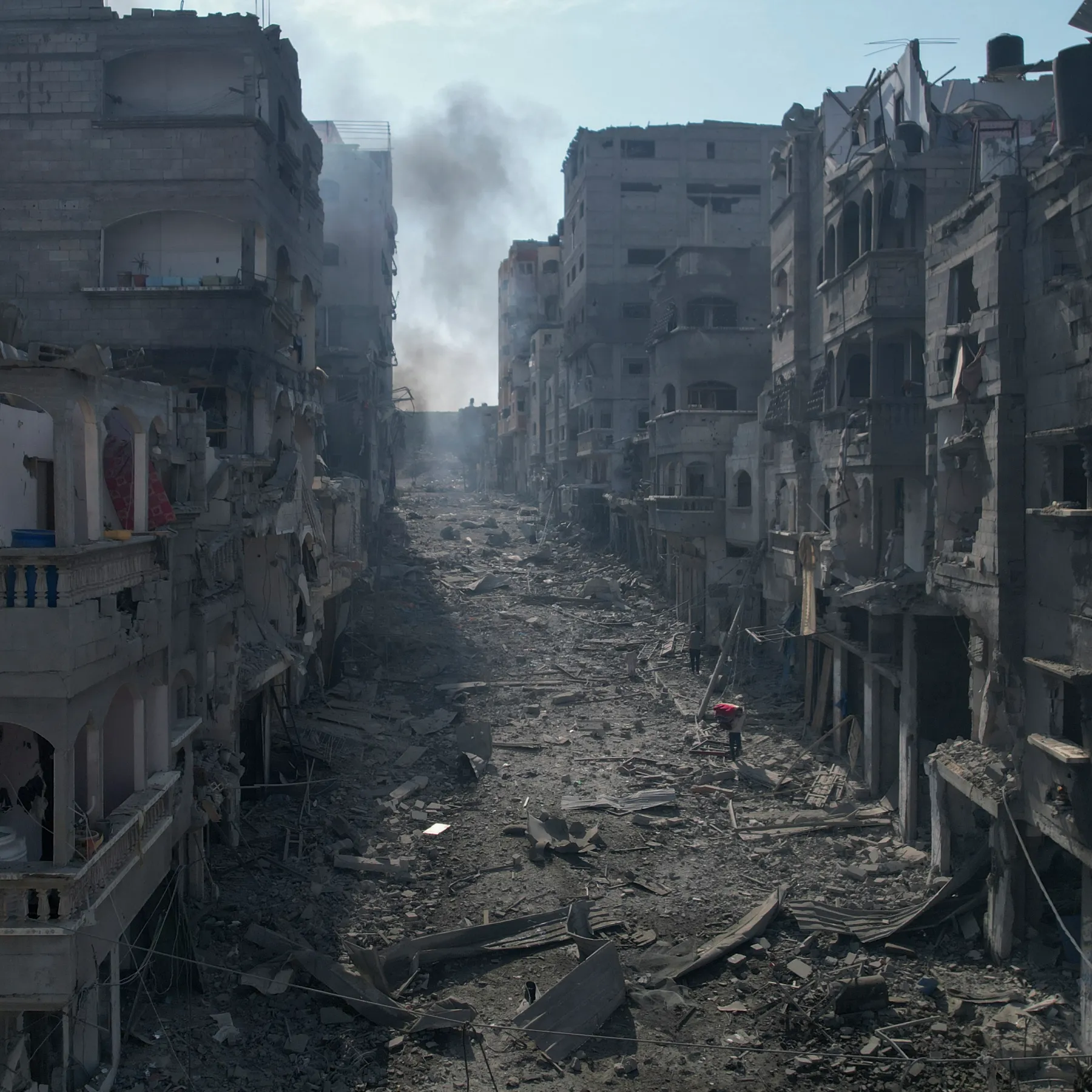
I grieve the loss Israelis took on Oct. 7. I grieve the tremendous loss of life the Palestinians have suffered. (And Israel’s immense slaughter of innocents is NOT genocide. Hamas calls for genocide. Israel is just being wrong in slaughtering so many innocent people.)
But back to the article. We want “solutions.” There is a fine line here. We can say, “Only Jesus can solve it” (as believers) and that’s it. This is wrong.
We can also say, “We MUST fix it because God says we can!” This is also wrong.
How do we respond?
Often the only visible action we can take is what we call “awareness,” and often this amounts to a fun run or a social media post.
Awareness isn’t bad, but buzz is not change. Awareness—and the opinionating that attends it—is not by itself a solution. Having ideas and information in our heads will not resolve a crisis halfway around the world and wholly outside our influence. “Can any one of you by worrying add a single hour to your life”—or subtract a single hour from some distant conflict? (Matt. 6:27).
We need prayer. We need presence. We need presence, as believers, in Israel. This is the challenge as peacemakers. The Body of Christ is dwindling in the very place Christianity was birthed. We need the Body of Christ there. Present. Helping. Praying. Peace making.
Christian faithfulness will not end this crisis, in large part because the people at war here overwhelmingly are not Christians. There are someMessianic Jewish Christians in the Israeli Defense Forces and among Israeli civilians, and some Arab believers are part of the civilian population of Gaza, where they and their churches have not been spared attack. But by and large—especially in the upper echelons, where strategy decisions are made, and entirely among Hamas—this is a conflict between non-Christian combatants.
The work is HARD. It is not something we solve by calling for one particular action or another on social media. Even the hard work doesn’t always “pay off.” A ministry of peacemaking in Israel that had Jews and Palestinians sitting down and talking to each other has seen 15 plus years of their work crushed. But they live in hope.
These are the people we need to hold up in prayer. The Church is needed by providing the presence of Christ.

 Apprentice 2 Jesus
Leave a comment